- No products in the cart.

30
Jul
Food labels have become more detailed over the last two decades. Organic, non-GMO, grass-fed, fair trade ,each one communicates something specific about how a product was made. Regenerative organic is the newest addition to that conversation, and in many ways the most ambitious. It does not describe a single attribute. It describes an entire farming philosophy.
For decades, the dominant goal of modern agriculture was to produce more. That goal was largely met. But the way it was met left behind a different kind of problem. In many parts of the world, agricultural soils have lost a significant portion of their natural fertility. Intensive farming practices, applied year after year, have reduced organic matter, accelerated erosion, and diminished the biodiversity that healthy ecosystems depend on.
A growing number of farmers, researchers, and food brands are now working from a different premise. Not just to slow that damage, but to reverse it. That shift in ambition is what regenerative organic means, and it is what the Regenerative Organic Certified standard was built to verify.
What Does Regenerative Organic Mean?
Regenerative organic is a whole-system approach to farming that goes beyond avoiding harm. Where conventional agriculture extracts, and organic agriculture preserves, regenerative organic actively works to restore. The goal is not to maintain the current condition of the land but to leave it measurably better than it was found.
The clearest way to understand it is as a layered standard. USDA Organic certification is the foundation. It prohibits synthetic pesticides, synthetic fertilizers, and genetically engineered ingredients. Regenerative Organic Certified, known as ROC, takes that foundation as its starting point and adds a second layer of requirements across three pillars: soil health, animal welfare, and social fairness.
In practice, this means:
- a product cannot be ROC certified without first meeting USDA Organic requirements
- organic is the baseline, not the ceiling
- ROC verifies that farming practices are actively improving the land, not just complying with a minimum input standard
The Regenerative Organic Alliance (ROA), the nonprofit that developed and administers the certification, describes it as the highest standard for organic agriculture in the world. That is not a marketing claim. It reflects the scope of what the certification requires and the independence of the audits used to verify it.
Where the Idea Comes From
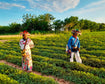
Regenerative agriculture is not a modern invention. The practices that define it, working with natural cycles rather than against them, maintaining living soil, rotating crops, integrating animals and plants into a single system, are rooted in Indigenous farming traditions that predate industrial agriculture by centuries.
The Regenerative Organic Alliance acknowledges this explicitly. As board member A'dae Romero-Briones (Cochiti/Kiowa) has described it, the Indigenous universal connection is the understanding that humans are part of the natural cycles around them, not separate from them. That philosophy is embedded in what regenerative agriculture means at its core.
The term itself has a documented history. Dr. George Washington Carver first introduced the concept of returning nutrients and life to depleted soils through farming, work that was foundational to what would later be called regenerative agriculture. Robert Rodale of the Rodale Institute later coined the specific term "regenerative organic" to distinguish a kind of farming that does not simply sustain current conditions but actively rebuilds them. His framing set the conceptual foundation for what the ROC standard formalizes today.
The Regenerative Organic Alliance was established in 2017 by the Rodale Institute, Dr. Bronner's, and Patagonia, alongside experts in soil health, animal welfare, and social equity. Its purpose was to turn that philosophy into a verifiable, auditable standard that consumers and producers could rely on.
Organic vs. Regenerative Organic: Inputs vs. Outcomes
One of the most useful ways to understand what regenerative organic adds is to look at how each standard is evaluated.
USDA Organic certification is fundamentally a prescriptive system. It works by defining what inputs are allowed and what inputs are prohibited. An organic farm is compliant when it follows the rules: no synthetic pesticides, no synthetic fertilizers, no GMOs, no prohibited handling methods. The standard does not measure what is happening to the soil over time. It measures whether the approved list was followed.
Regenerative organic certification is an outcomes-based system. It evaluates whether the land is actually improving. Cover crops, crop rotation, reduced tillage, composting, and responsible nutrient management are not just encouraged practices under ROC. They are verified requirements tied to measurable results in soil health, biodiversity, and ecosystem function. A farm can be certified organic while the health of its soil remains flat or declines year over year. That outcome would not satisfy ROC requirements.
The distinction matters because it changes what a label can tell a shopper. Organic says something about how a product was produced. Regenerative organic says something about what happened to the land as a result of producing it.
| Standard | USDA Organic | Regenerative Organic Certified (ROC) |
|---|---|---|
| System type | Prescriptive, input-based | Adaptive, outcome-based |
| Synthetic pesticides and fertilizers | Prohibited | Prohibited (inherited from organic baseline) |
| GMOs | Prohibited | Prohibited (inherited from organic baseline) |
| Soil health improvement required | Baseline soil management practices | Verified regenerative practices with measurable outcomes |
| Animal welfare standards | Basic organic livestock standards | Enhanced pasture-based standards including the Five Freedoms |
| Social fairness requirements | Not a core pillar | Required and independently verified |
| Carbon sequestration focus | Not evaluated | Integral to soil health pillar |
| Third-party regenerative audit | No | Yes, annual independent audits |
| Requires prior organic certification | N/A | Yes, mandatory baseline |
The Three Pillars of Regenerative Organic Certified
ROC certification is built around three pillars that are evaluated together, not independently. A farm or brand cannot excel in one and neglect the others. The standard is designed to work as an integrated system.
Soil Health
The soil is treated as a living system, not a growing medium. Regenerative practices under ROC are designed to increase organic matter, restore biological activity, and rebuild the natural fertility of agricultural land through methods that work with ecosystem cycles rather than replacing them.
Verified practices include:
- crop rotation to prevent nutrient depletion and reduce pest pressure without synthetic inputs
- cover crops that keep living roots in the soil year-round, capture atmospheric carbon, and suppress weeds naturally
- conservation tillage or reduced tillage to preserve soil structure and the microbial communities that depend on it
- composting to return organic matter and microbial diversity to the soil
- responsible nutrient management that works with natural cycles rather than overriding them
Healthy soil also plays a direct role in climate resilience. Soils managed under regenerative practices have a greater capacity to sequester atmospheric carbon, retain water during drought conditions, and drain efficiently during heavy rainfall. These are not secondary benefits. They are outcomes that the certification tracks.
Animal Welfare
When production involves animals, ROC requires standards that go beyond what organic livestock requirements mandate. The certification draws on the Five Freedoms framework, a globally recognized set of animal welfare principles that include freedom from hunger and thirst, freedom from discomfort, freedom from pain and disease, freedom to express normal behavior, and freedom from fear and distress.
In practice this means pasture access as a genuine standard rather than a minimum, low-stress handling methods, no concentrated animal feeding operations (CAFOs), and conditions that allow animals to behave according to their natural patterns.
For a product like peanut butter, which contains no ingredients of animal origin, this pillar does not apply directly to the specific product. It applies to any certified operation in the broader supply chain where animals are part of the farming system, and it remains a required element of what the ROC standard means as a whole.
Social Fairness
A farming system cannot be described as regenerative if it restores the land while extracting from the people who work it. ROC incorporates social fairness as a verified pillar, not an aspirational statement.
Requirements include:
- fair labor conditions and compensation
- safe working environments across the supply chain
- freedom of association for farmworkers
- respect for human rights at every point of production
- active support for the development of farming communities
This pillar reflects something the certification's founders built in deliberately: the recognition that soil health and human welfare are not separate concerns. The long-term resilience of a farming system depends on both.
"Regenerative" on a Label Does Not Always Mean Certified
This is one of the most important things a shopper can know. The word "regenerative" is not a regulated term in the United States. Any brand can print it on a package without meeting a defined standard, submitting to an audit, or holding any certification at all. The claim carries no legal requirement and no independent verification by default.
Regenerative Organic Certified is different for several specific reasons:
- it is a registered trademark, not a generic descriptor
- it requires USDA Organic certification as a mandatory prerequisite
- it mandates verified compliance across all three pillars
- it is audited annually by independent third-party certifiers
- the ROC seal on a product can only appear with explicit written approval from the Regenerative Organic Alliance
When a product says "regenerative" without the ROC seal, that claim may reflect genuine farming intentions. It may also reflect a marketing decision. The seal is what converts the claim into a verifiable commitment. For shoppers who want to know the difference, looking for the ROC seal specifically is the most reliable way to confirm that the word on the label has been tested against a standard.
Bronze, Silver, and Gold: How the Certification Levels Work
ROC certification is not a single threshold. It operates across three levels, Bronze, Silver, and Gold, designed to recognize where a farm or brand currently stands and provide a structured path toward higher performance over time.
| Level | What It Represents |
|---|---|
| Bronze | Strong initial compliance across the three pillars. A meaningful starting point that meets the foundational requirements of the ROC standard. |
| Silver | Majority compliance across soil health, animal welfare, and social fairness, with demonstrated progress beyond the baseline requirements. |
| Gold | The highest tier of the certification. Represents full, verified compliance at the most rigorous level across all three pillars simultaneously. |
The tiered structure matters because regenerative agriculture is not a fixed destination. It is a continuous improvement process. A farm entering the program with Bronze certification has made a credible, audited commitment to the standard. The system is built to support the progression toward Silver and Gold as practices deepen and outcomes improve. Each level carries the same verified, independent audit process. What changes is the depth of compliance required.
When a product carries the ROC seal, the certification level may appear alongside it. Bronze, Silver, or Gold tells a shopper not only that the standard was met but how completely it was met at the time of certification.
How to Read the ROC Seal on a Product
The way the ROC seal appears on packaging depends on the nature of the product itself. Understanding that difference makes the label easier to interpret correctly.
For single-ingredient products, such as a bag of coffee, a bottle of coconut oil, or a container of a single grain or flour, the full ROC seal may appear when the ingredient itself was produced under certified regenerative organic conditions.
For multi-ingredient products, the language shifts. Instead of the full seal applied to the product as a whole, the label may read "Made with Regenerative Organic Certified [ingredient name]." This indicates that a specific ingredient within the formulation was sourced from a certified operation, while the product as a whole may contain additional ingredients that are not individually ROC certified.
Both forms of the label are legitimate and audited. The distinction is not about quality. It is about precision. A multi-ingredient product that specifies which ingredient carries the certification is being transparent about exactly where in the formulation the standard applies. That specificity is itself part of what the ROC framework requires to prevent misuse of the seal.
The Highest Bar We Know: Why Just About Foods Chose ROC
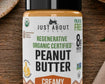
When Just About Foods set out to develop a peanut butter, the question was not only what would go into the jar. It was what standard the sourcing behind it would have to meet. The answer was the most demanding one available: Regenerative Organic Certified.
For a plant-based product, the soil health and social fairness pillars carry the most direct weight. The peanuts came from soil managed under verified regenerative practices, cover cropped, rotated, composted, and actively built up over time rather than drawn down. The farming community that produced them operated under labor conditions that the certification required and an independent auditor confirmed. That is the story behind the jar before a single ingredient is processed.
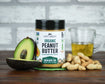
The result is two products that reflect that commitment directly. The Regenerative Organic Certified Creamy Peanut Butter and the Regenerative Organic Certified Crunchy Peanut Butter are not positioned as premium for the sake of it. They represent what it looks like when a brand decides that the highest bar it knows is the only one worth meeting.
FAQs
What does regenerative organic mean in simple terms?
It means a farming approach that goes beyond organic standards to actively restore soil health, require fair treatment of farmworkers, and, where animals are involved, enforce higher welfare standards. The goal is not just to avoid harm but to improve the land through the act of farming it.
What is the difference between organic and regenerative organic?
Organic certification is a prescriptive system that regulates which inputs are allowed or prohibited. Regenerative organic certification is an outcomes-based system that evaluates whether the land is actually improving. A product can be certified organic without any requirement to rebuild soil health. Regenerative Organic Certified requires verified improvement across soil health, animal welfare, and social fairness, and uses USDA Organic as its mandatory starting point.
Is "regenerative" on a label the same as Regenerative Organic Certified?
No. The word "regenerative" is not a regulated term and can be used in marketing without certification, auditing, or meeting any defined standard. Regenerative Organic Certified is a registered trademark administered by the Regenerative Organic Alliance. It requires organic certification as a baseline, mandates compliance across three pillars, and is verified by independent third-party auditors annually.
What are the Bronze, Silver, and Gold levels of ROC?
They are three tiers of certification that reflect the depth of compliance a farm or brand has achieved. Bronze represents strong initial compliance. Silver reflects majority compliance with demonstrated progress. Gold is the highest level, requiring full verified compliance across all three pillars simultaneously. All three levels are independently audited.
What does the ROC seal mean on a multi-ingredient product?
On a multi-ingredient product, the seal typically appears alongside the phrase "Made with Regenerative Organic Certified [ingredient name]," indicating that a specific ingredient was sourced from a certified operation. This is not a lesser form of the certification. It reflects the ROC framework's requirement for precision about exactly where in a formulation the standard applies.
What does regenerative organic farming have to do with climate change?
Soils managed under regenerative practices have a greater capacity to sequester atmospheric carbon than soils managed under conventional methods. Practices like cover cropping, reduced tillage, and composting increase soil organic matter, which stores carbon that would otherwise remain in the atmosphere. The ROC certification tracks soil health as a measurable outcome, which means carbon sequestration is not a side effect of the standard. It is part of what the standard is designed to achieve.